
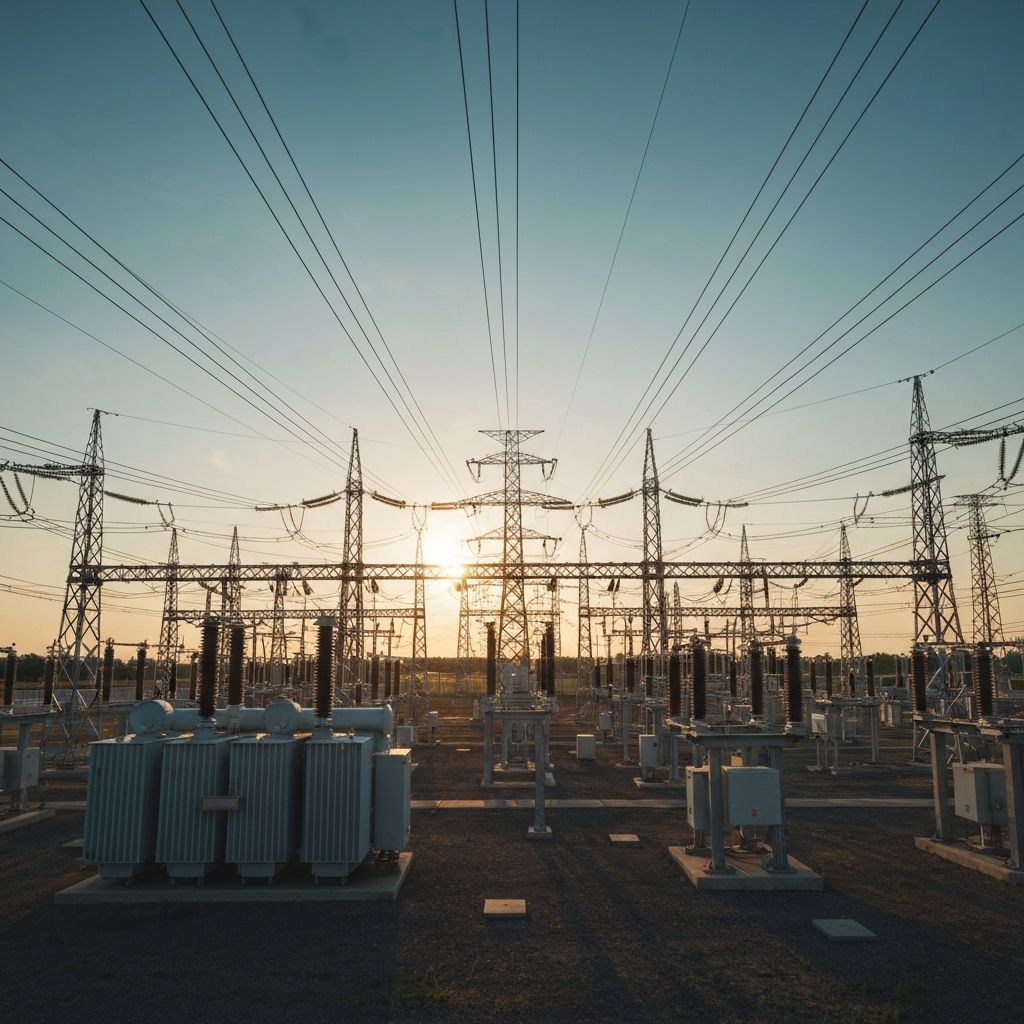
PJM Interconnection manages the electrical grid across 13 states and the District of Columbia, from New Jersey to Illinois, from Virginia to Michigan. It's the largest RTO (Regional Transmission Organization) in North America, serving 65 million people and managing a grid with over 185,000 MW of generating capacity.
More importantly for our purposes, PJM is home to "Data Center Alley"—the stretch of Northern Virginia from Ashburn to Manassas that contains the largest concentration of data centers on Earth. Over 70% of the world's internet traffic flows through this region. And PJM's interconnection queue tells a fascinating story about the competition for power here.
Understanding the Queue
Before diving into the data, let's establish what the interconnection queue actually is and why it matters.
When you want to connect a large load (like a data center) or a new generator (like a solar farm) to the grid, you can't just show up and plug in. You need to apply for interconnection through a formal process administered by the ISO/RTO.
The process works roughly like this:
Application filing. You submit a request specifying your location, capacity requirements, and projected timeline. This puts you "in queue" with a specific queue position.
Feasibility study. The ISO analyzes whether the grid can accommodate your project without upgrades. This takes 3-6 months.
System impact study. A detailed engineering analysis of how your project affects the broader grid, including stability and reliability considerations. Another 6-12 months.
Facilities study. If upgrades are required, this study determines exactly what needs to be built and who pays for it. 3-6 months more.
Interconnection agreement. Finally, you sign a formal agreement specifying all terms and conditions. The entire process typically takes 2-4 years minimum.
Here's the critical point: queue position matters enormously. Projects are studied in order. If you're #5 in the queue at a particular substation and projects #1-4 require grid upgrades, you might be responsible for paying for those upgrades—even if you would have been fine without them. This is called "cost allocation" and it's killed many projects.
The Current State of PJM's Queue
As of December 2025, PJM has over 2,400 active projects in its interconnection queue, representing more than 250 GW of proposed capacity. To put that in context: PJM's current peak demand is around 150 GW.
The math doesn't work. Most of these projects will never be built. Some are speculative filings designed to hold queue positions. Others are exploratory projects that will be withdrawn when developers realize the costs. Many are simply waiting for market conditions to change.
But buried in this noise are real signals about where capacity is available—and where it isn't.
What Our Analysis Found
We processed every active project in PJM's queue, geocoded their locations, and analyzed them against substation capacity data. Here's what we found:
### Northern Virginia Is Maxed Out
The data confirms what industry insiders already know: getting power in Loudoun County is extremely difficult.
We identified 47 pending data center applications in Loudoun County alone, totaling 8.2 GW of requested capacity. That's more than the entire peak demand of some small countries. The average queue position for these projects is #12, meaning most will face significant wait times and cost allocation burdens.
The key substations serving Data Center Alley—Loudoun, Beaumeade, and Goose Creek—are at or near capacity. New projects are looking at interconnection timelines of 5-7 years and potential upgrade costs in the hundreds of millions.
### Hidden Capacity in Secondary Markets
The more interesting finding is where capacity does exist.
We identified 23 substations across PJM with the following characteristics:
- More than 50 MW of immediately available capacity
- Fewer than 3 projects in the interconnection queue
- Adequate transmission headroom
- Within 25 miles of a fiber route
These substations are in places like:
- Rural Pennsylvania (particularly the Harrisburg-Lancaster corridor)
- Central Ohio (Columbus metro area periphery)
- Western Maryland (near existing transmission corridors)
- Southern New Jersey (near the Salem nuclear plant)
None of these locations would be anyone's first choice based on traditional site selection criteria. But if your primary constraint is power availability, they deserve serious consideration.
### Solar Projects Are Blocking Commercial Load
One of the most surprising findings: speculative solar projects filed years ago are holding queue positions that delay commercial and industrial loads.
In 2021 and 2022, solar developers flooded PJM's queue with applications, anticipating favorable policy treatment and subsidy availability. Many of these projects were exploratory—developers filed applications to hold positions while they figured out if projects were actually viable.
Now, in 2025, these zombie projects are clogging the queue. They're not moving forward, but they haven't been withdrawn either. And every commercial project that filed after them is stuck waiting.
We found 340+ solar projects in PJM's queue that have been pending for more than 3 years with no apparent progress. Together, they represent over 45 GW of "phantom" capacity that's blocking real development.
PJM has implemented queue reform measures to address this, but the backlog will take years to clear.
The Queue Position Game
Understanding queue position dynamics is critical for anyone considering a PJM site.
Let's walk through a concrete example. Imagine you're evaluating a site near a substation we'll call "Example Sub." The substation has 100 MVA of transformer capacity, and current load is 60 MW. On paper, there's 40 MW of headroom.
But when you check the queue, you find:
- Project A: 20 MW data center, queue position #1, filed 2023
- Project B: 15 MW industrial, queue position #2, filed 2023
- Project C: 30 MW solar farm, queue position #3, filed 2022 (yes, filed earlier but different study cycle)
If you file today, you're #4. The feasibility study will show that the substation can't handle all four projects without upgrades. Someone needs to pay for a new transformer.
Under PJM's cost allocation rules, the cost is typically assigned to the project that "triggers" the upgrade. But determining which project triggers it requires sequential analysis. Project A studies first, gets approved. Project B studies next, still fits. Project C triggers the upgrade—but Project C has been sitting dormant for years.
What happens? Often, Project C eventually withdraws, which reshuffles everything. But you won't know that for certain, and you can't plan around it.
This is why queue intelligence is so valuable. Knowing not just who's in queue, but their history, their likelihood of completion, and their financial backing, lets you make much better decisions.
Strategic Implications
For data center developers, this analysis suggests several strategic approaches:
Look beyond the obvious. Northern Virginia is obvious. Everyone knows about it, everyone wants to be there, and that's exactly why it's so constrained. The real opportunities are in secondary markets that offer adequate power without the queue competition.
Time your filings strategically. If you see a large project ahead of you that looks speculative, it might be worth waiting to see if it withdraws. On the other hand, if the queue is moving quickly, getting in line early is critical.
Secure multiple positions. Large developers are increasingly filing applications at 3-4 potential sites simultaneously, then making final decisions once queue positions and costs become clearer. This requires more upfront capital but reduces risk.
Monitor queue changes. The queue is dynamic. Projects withdraw, get delayed, or accelerate. Having real-time visibility into these changes lets you respond quickly when opportunities emerge.
How Databee Helps
Our Capacity Scout tier ($50) shows you every substation in PJM with available capacity above your specified threshold. Filter by state, by capacity level, by voltage class. Get results in seconds instead of weeks.
Our Queue Intel tier ($500) gives you the complete interconnection queue for any county. See every project, every queue position, every MW requested. Understand exactly where you'd stand if you filed today.
We update our data weekly, pulling from PJM's public queue reports and cross-referencing with our proprietary analysis of project viability.
The information is there. The question is whether you can access it before your competitors do.