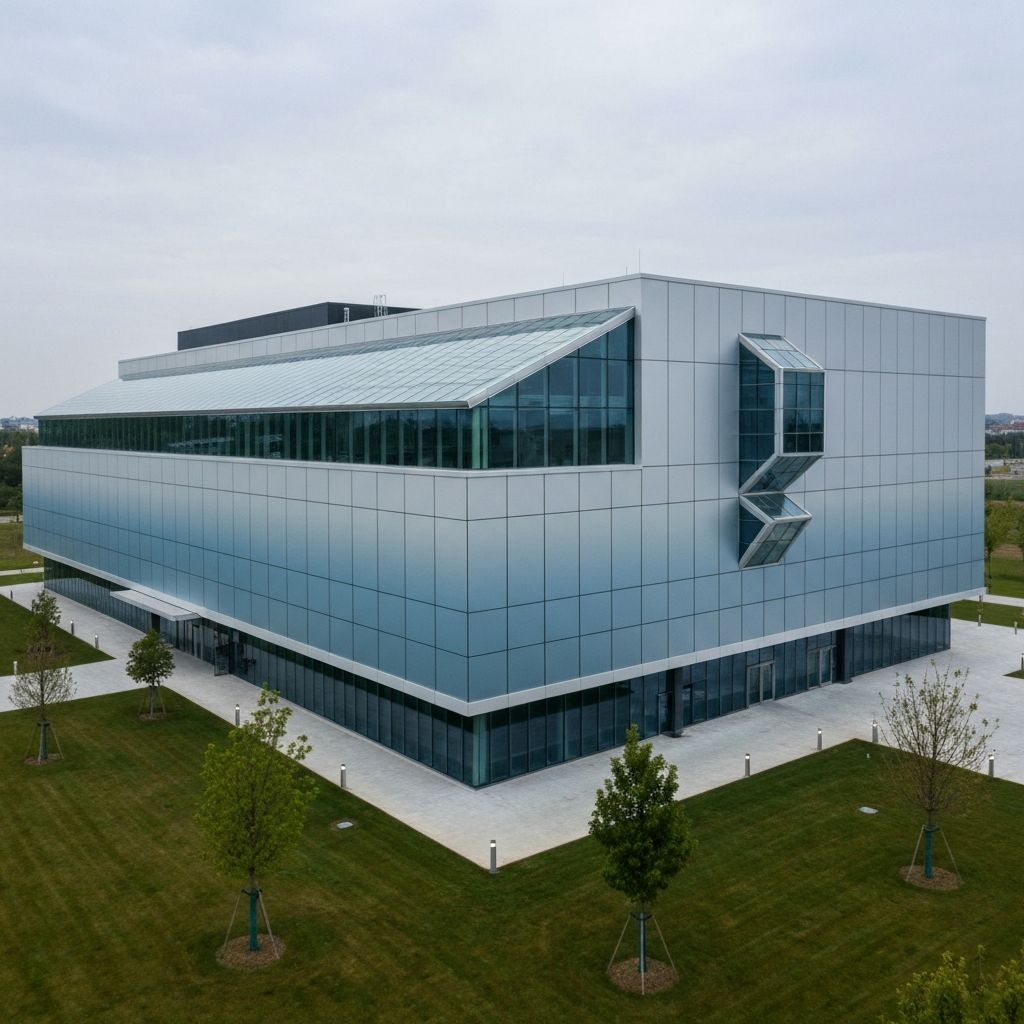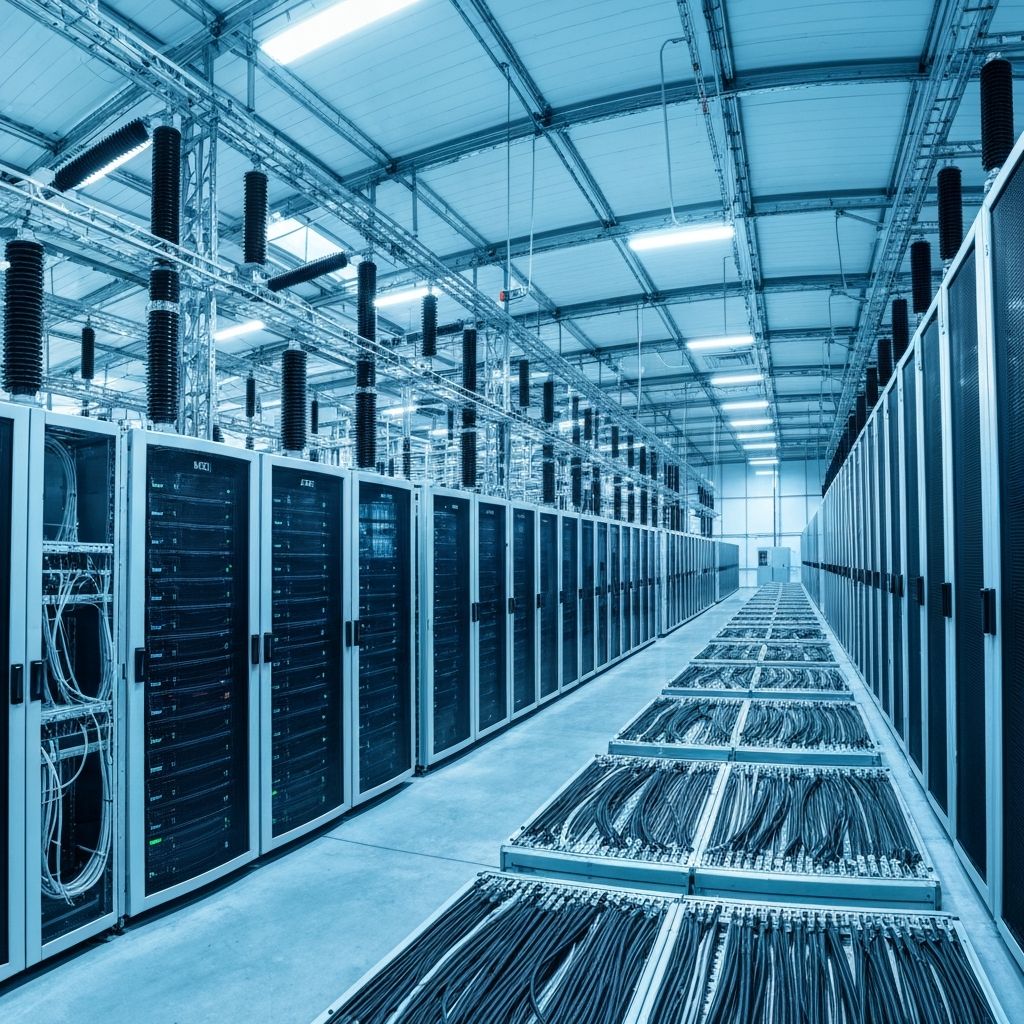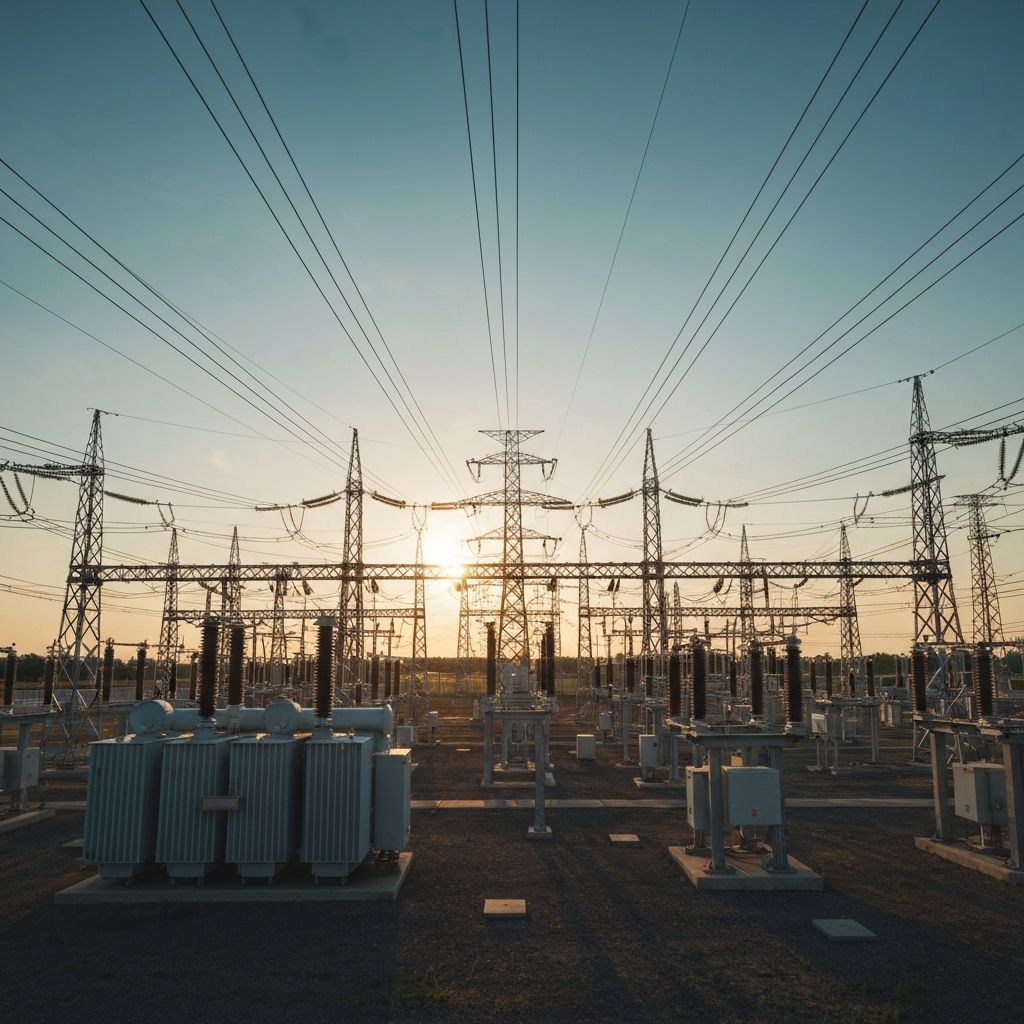
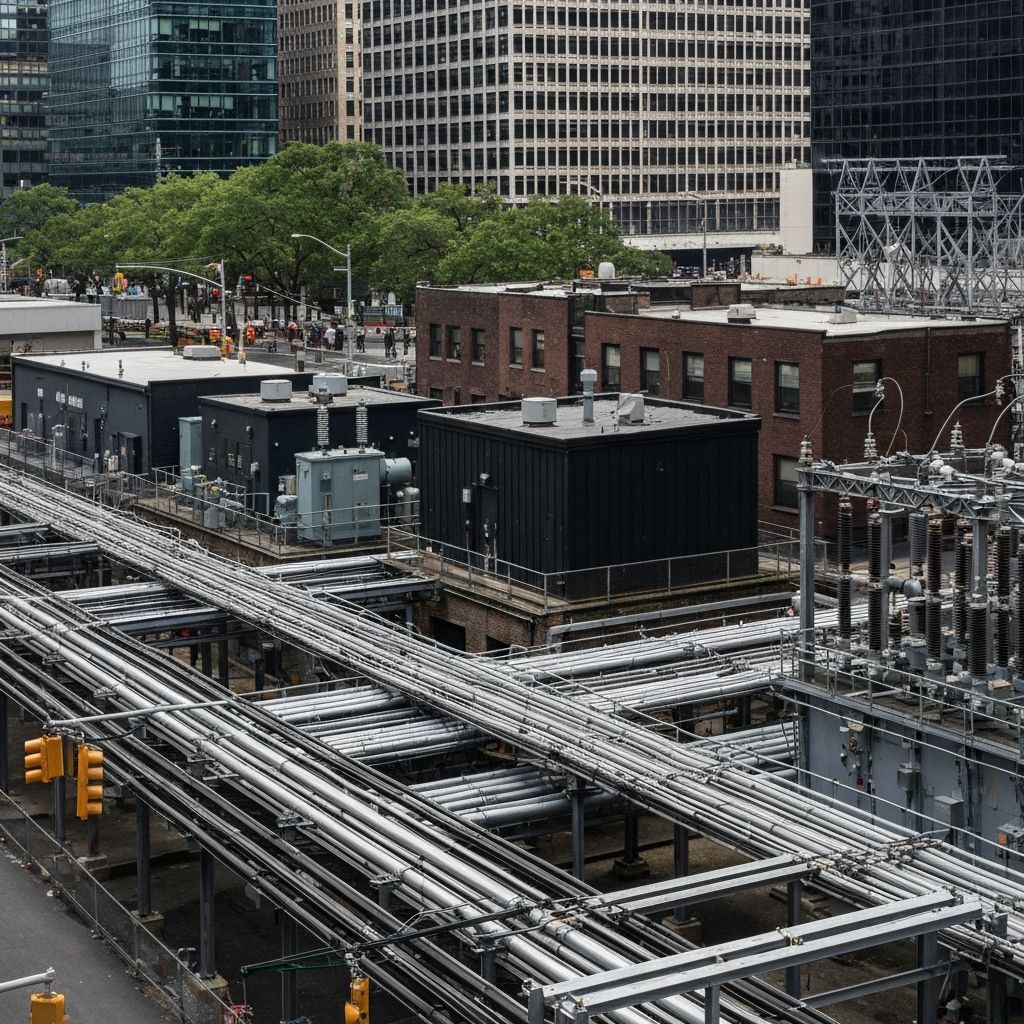
The Northeast United States presents unique challenges and opportunities for data center development. Two ISOs—NYISO (New York Independent System Operator) and ISO-NE (ISO New England)—manage the grids serving this economically vital region.
Understanding the differences between these ISOs is crucial for anyone evaluating Northeast locations. The tradeoffs involve power costs, interconnection timelines, available capacity, and regulatory complexity.
NYISO Overview
NYISO manages New York State's grid, serving about 20 million people across a geographically and economically diverse region. The grid stretches from New York City—one of the densest load centers in the world—to rural upstate regions with abundant hydropower.
### Key Characteristics
High power costs, especially downstate. The New York City metropolitan area has some of the highest electricity prices in the United States, often exceeding $0.15/kWh for large industrial users. Upstate costs are lower but still above national averages.
Aggressive renewable energy mandates. New York's Climate Leadership and Community Protection Act (CLCPA) requires 70% renewable electricity by 2030 and 100% zero-emission by 2040. This is driving massive investment in offshore wind and solar.
Complex permitting environment. New York has extensive environmental review requirements (SEQRA) and local permitting processes that can add 1-2 years to project timelines.
Strong demand from financial services. Wall Street and the broader financial industry require ultra-low latency and high reliability, driving premium data center development in the New York metro.
### Capacity Situation
Downstate New York (New York City, Long Island, Westchester) is severely capacity-constrained. The Indian Point nuclear plant closure in 2021 removed 2,000 MW of generation, and transmission into the city is limited.
Upstate New York has more capacity availability. The Hudson Valley, Capital Region, and Western New York have substations with meaningful headroom. However, transmission to move power between upstate and downstate is constrained.
ISO-NE Overview
ISO-NE manages the grid across six New England states: Connecticut, Maine, Massachusetts, New Hampshire, Rhode Island, and Vermont. The region has about 15 million people and a diverse economy spanning biotech, education, financial services, and technology.
### Key Characteristics
Moderate power costs. New England electricity prices are above national average but generally below New York metro levels. Large industrial rates typically range $0.08-0.12/kWh.
Transmission constraints between regions. The New England grid has several known transmission bottlenecks, particularly between northern generation sources (Maine, New Hampshire hydro) and southern load centers (Boston, Connecticut).
Limited new generation capacity. New England has been slow to add new generation capacity. The region is increasingly dependent on imported natural gas (constrained by pipeline capacity) and Canadian hydropower.
Strong demand from biotech and tech. Boston's biotech cluster and the region's technology sector create significant demand for data center services.
### Capacity Situation
Greater Boston faces moderate capacity constraints. Key substations in the Route 128 corridor and Cambridge area have limited headroom.
Connecticut has more availability, particularly in the I-91 corridor. The region benefits from proximity to New York financial markets while having lower costs.
Northern New England (Maine, New Hampshire, Vermont) has capacity available but infrastructure gaps—limited fiber, smaller labor pools, and less developed real estate markets.
Head-to-Head Comparison
### Power Costs
NYISO typically has higher costs, particularly downstate. However, upstate New York can be competitive with ISO-NE. The cost difference depends heavily on specific location within each ISO.
Large users in both regions can negotiate rates below retail through direct bilateral contracts with generators. Renewable PPAs are increasingly common.
### Interconnection Timelines
NYISO's interconnection process is generally faster than ISO-NE's, despite the regulatory complexity. NYISO has invested in streamlining study processes.
ISO-NE has a larger backlog of interconnection requests, particularly for offshore wind and solar projects. Commercial loads can get caught behind generation projects in the queue.
### Capacity Availability
Neither region has abundant capacity, but pockets of availability exist in both:
NYISO opportunities: Hudson Valley, Capital Region (Albany area), Western New York (Buffalo/Rochester), and certain Long Island locations near former generation sites.
ISO-NE opportunities: Connecticut I-91 corridor, Southern New Hampshire, Rhode Island, and some Maine locations.
Our Capacity Scout API can identify specific substations with availability in both regions.
Strategic Recommendations
For most use cases, we recommend a portfolio approach rather than concentrating in one region:
### If Latency is Critical
Locate primary facilities in the region closest to your users. Financial services firms should be in or near New York City. Boston-area tech and biotech should be in Greater Boston.
Accept higher costs and longer timelines for these premium locations. The latency advantage justifies the premium.
### If Cost is Critical
Look at secondary locations: upstate New York, Connecticut, Southern New Hampshire. These areas offer lower costs while maintaining reasonable connectivity to major metros.
Consider these locations for backup/disaster recovery, batch processing, and other latency-tolerant workloads.
### For Training Workloads
AI training runs typically don't require ultra-low latency. This opens up more options.
Upstate New York is particularly interesting: cheap hydropower, cool climate (reducing cooling costs), and available capacity at some substations. The region is increasingly attracting AI training facilities.
Northern New England is worth evaluating for similar reasons, though fiber connectivity may be limiting.
### For Backup/DR
Every organization needs geographically diverse backup capacity. If your primary facility is in one of these ISOs, consider the other for DR.
The two regions are electrically independent (except for limited ties), providing genuine diversity against regional grid events.
Using Databee for Northeast Analysis
Our API provides comprehensive coverage of both NYISO and ISO-NE:
Capacity Scout shows every substation meeting your criteria in either region. Compare availability across both ISOs with a single query pattern.
Queue Intel reveals the interconnection queue for any county in either region. Understand your queue position before committing to a site.
Cross-Region Analysis lets you compare opportunities systematically. Query both ISOs with the same parameters and evaluate tradeoffs data-driven.
The Northeast is a competitive market for data center development. The companies with better information—who can identify opportunities faster and make data-driven tradeoffs—will secure the best locations.
That information is available today through Databee.