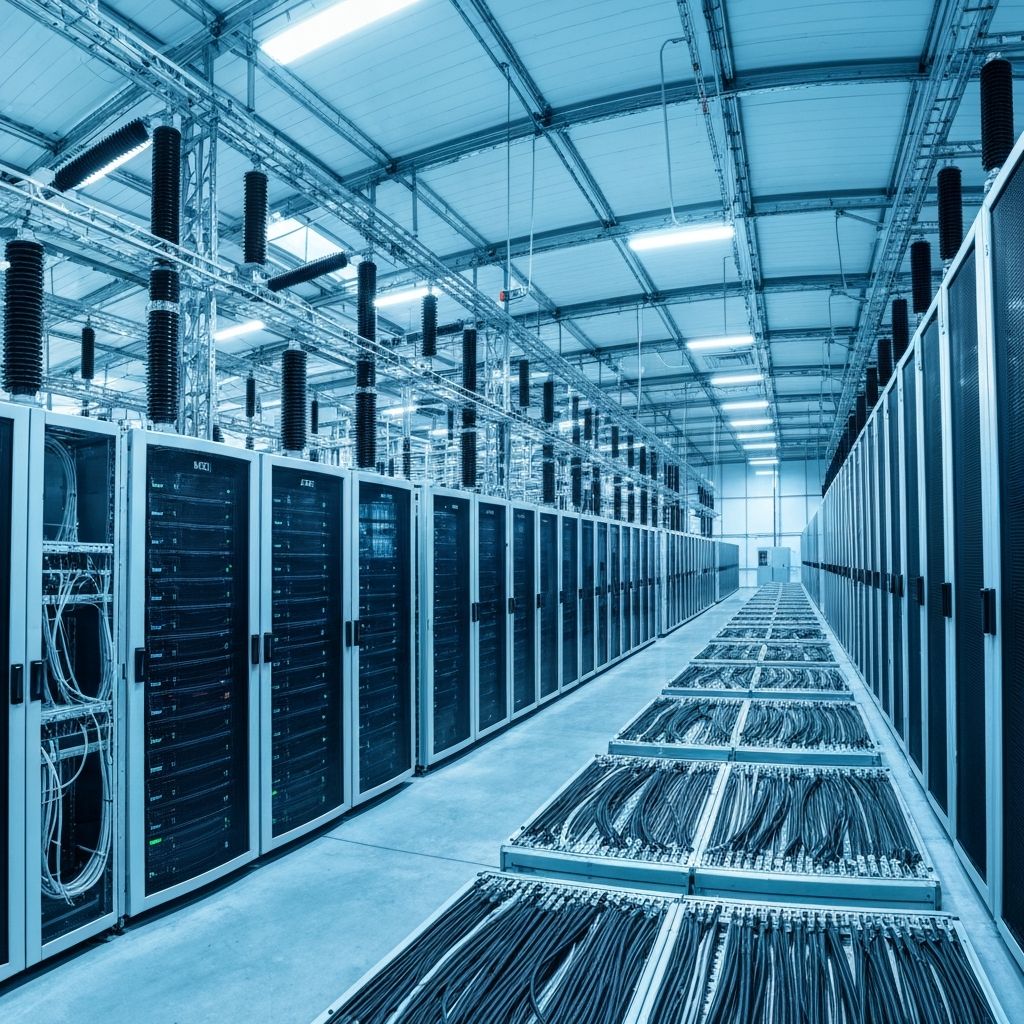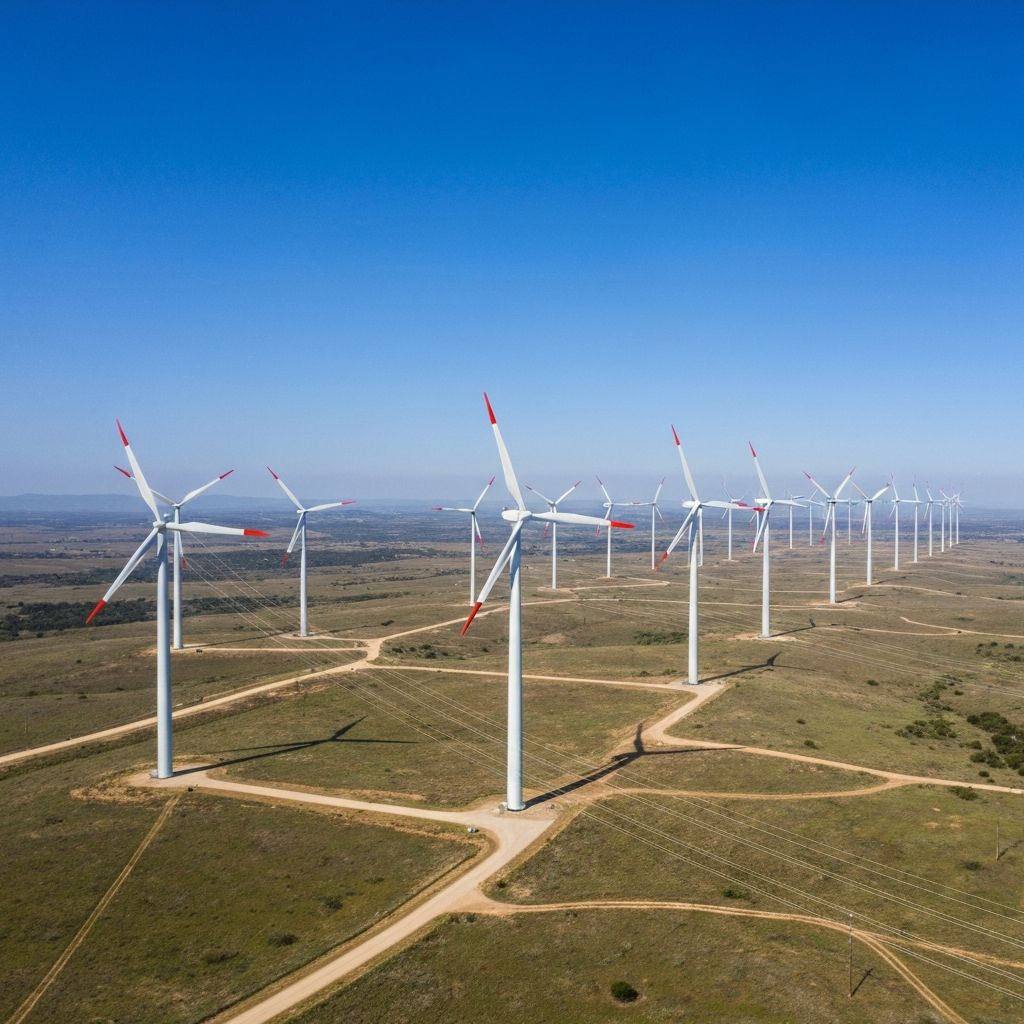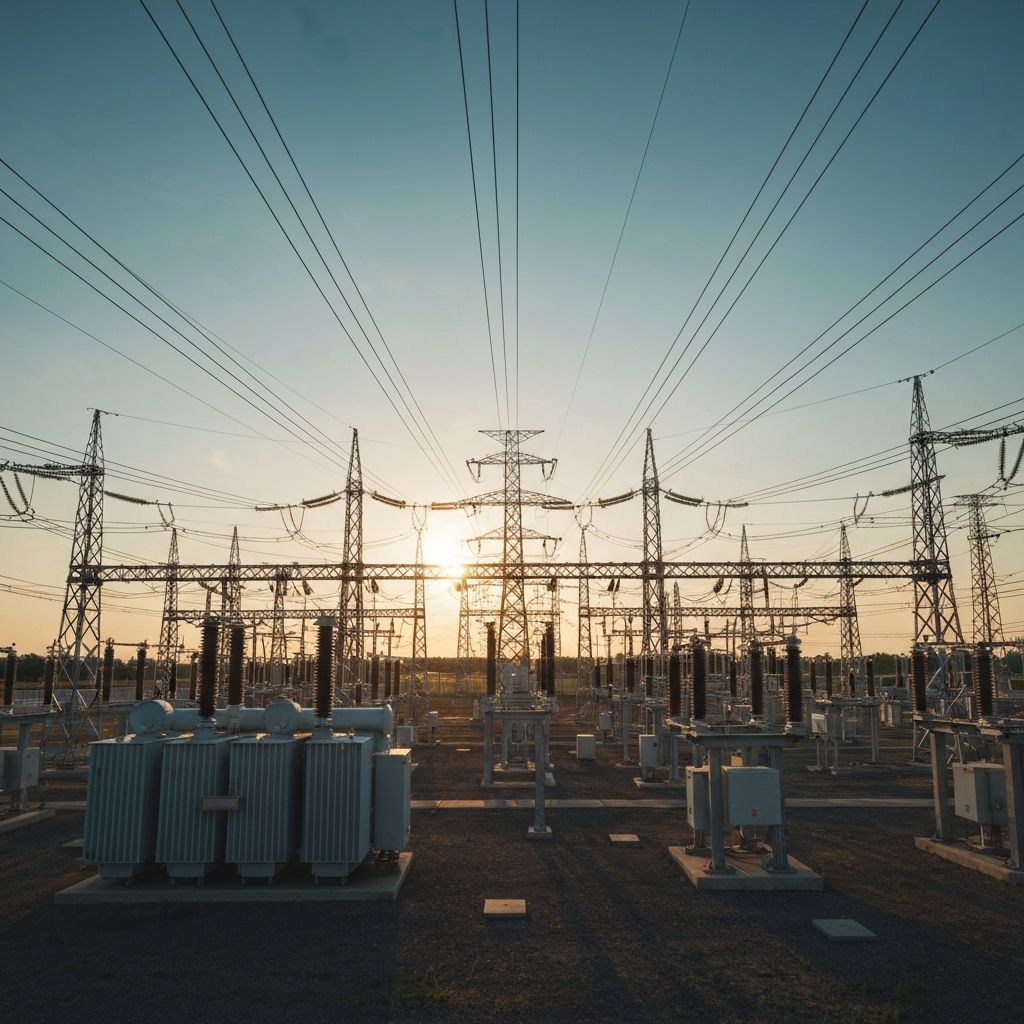
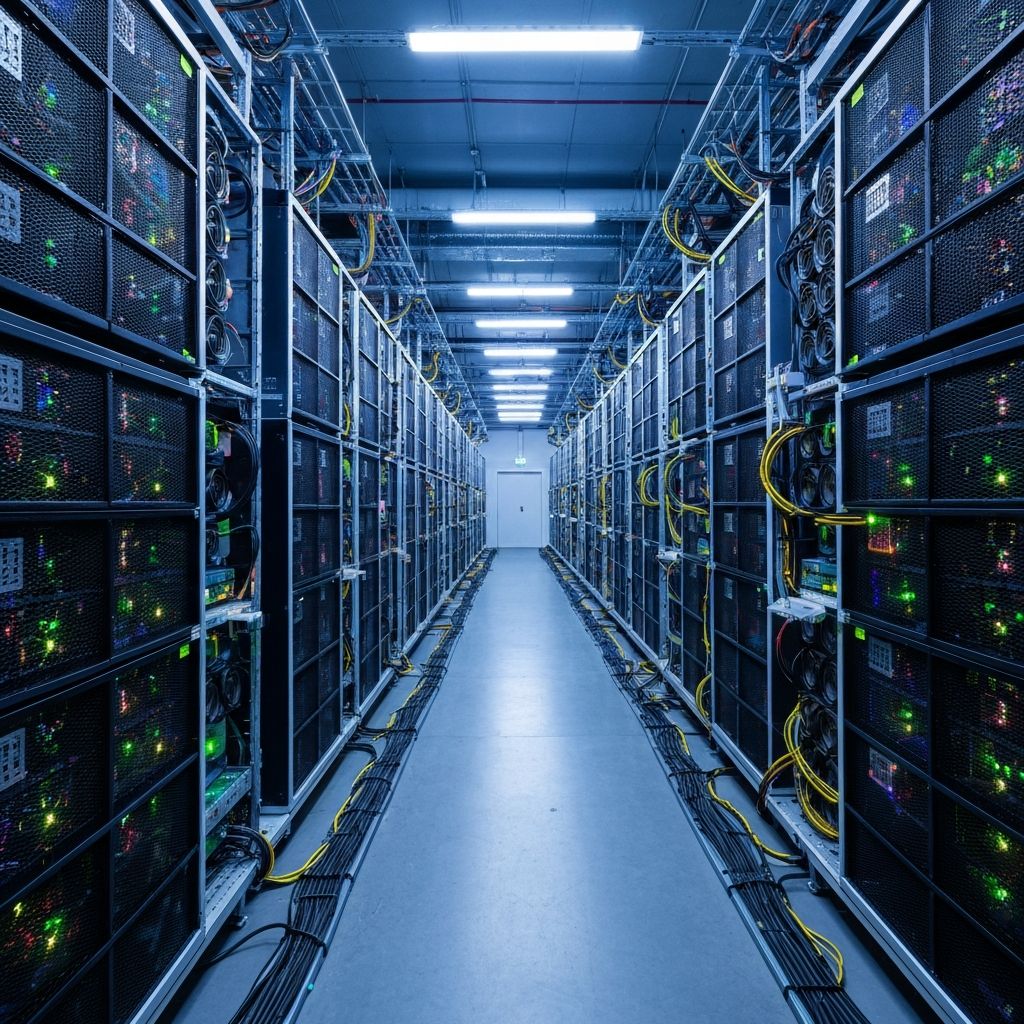
Bitcoin miners and AI data centers have more in common than you might think. Both need massive amounts of electricity. Both are location-flexible. Both can pay premium prices for power. And increasingly, both are competing for the same grid capacity.
This isn't a theoretical competition. We're seeing it play out in real time across ERCOT, PJM, and other ISOs. Projects are being delayed, sites are being claimed, and the dynamics of grid development are shifting as these two industries collide.
The Similarities
Bitcoin mining operations and AI data centers share several key characteristics that put them in direct competition:
### Large, Consistent Power Loads
Both industries deploy at scale. A typical Bitcoin mining facility draws 20-100 MW of continuous power. An AI training cluster can easily consume 50-200 MW. The largest facilities in both industries exceed 500 MW.
This scale puts them in the same category from the grid's perspective: major industrial loads requiring substation-level interconnection and potentially triggering transmission upgrades.
### Location Flexibility
Unlike manufacturing plants that need to be near supply chains and customers, both Bitcoin mining and AI workloads can locate almost anywhere with power and connectivity.
Bitcoin miners care about electricity cost, not latency. As long as they can reach the internet to submit blocks, they're fine. They've deployed in remote areas of Texas, upstate New York, and even converted former aluminum smelters in the Pacific Northwest.
AI workloads have more varied requirements, but many—training runs, batch processing, backup/disaster recovery—can tolerate significant latency. The inference workloads that require low latency are still a minority of total AI power demand.
### Capital Availability
Both industries have access to significant capital for infrastructure investment.
Bitcoin mining has attracted billions in investment, even during crypto bear markets. Public mining companies like Marathon, Riot, and CleanSpark have raised hundreds of millions each. Private operations backed by energy trading firms and sovereign wealth add billions more.
AI infrastructure has attracted even more. Hyperscalers are spending over $100 billion annually on capital expenditure, much of it for data centers. Specialized AI infrastructure companies like CoreWeave and Lambda have raised billions. Sovereign AI initiatives add additional capital.
### Sophisticated Site Selection
Both industries employ sophisticated site selection processes focused on power availability.
Bitcoin miners have been optimizing for cheap power for over a decade. They've developed expertise in finding stranded generation, negotiating demand response agreements, and identifying grid constraints.
AI data center developers are newer to this game but learning quickly. The largest hyperscalers now employ former utility executives and energy traders specifically to find power.
The Differences
Despite similarities, there are important distinctions that affect how these industries compete:
### Latency Requirements
AI inference workloads often need low-latency connectivity to end users. A chatbot response delayed by 500ms feels sluggish. Real-time applications like autonomous vehicles can't tolerate any latency.
Bitcoin mining has no latency requirements beyond basic internet connectivity. A mining pool can be located anywhere in the world.
This difference affects site selection. AI inference workloads cluster near major fiber routes and network exchange points. Bitcoin miners can deploy in truly remote locations that AI operators would reject.
### Power Quality Sensitivity
AI chips—especially high-end GPUs and TPUs—are sensitive to power quality. Voltage fluctuations, frequency variations, and brief outages can crash training runs, corrupt data, or damage hardware. AI facilities invest heavily in power conditioning, UPS systems, and backup generation.
Bitcoin mining ASICs are more tolerant of power issues. A brief outage means lost mining revenue during the outage, but no lasting damage. Miners are more willing to accept lower-quality power in exchange for lower costs.
### Interruptibility
Some Bitcoin miners participate in demand response programs, agreeing to curtail load during peak periods in exchange for lower rates. This flexibility lets them access power that wouldn't be available to non-interruptible loads.
Most AI workloads cannot be interrupted. Training runs that stop mid-execution may need to restart from checkpoints, losing hours or days of work. Inference workloads serving live users obviously can't pause.
This makes AI operators less flexible in their power procurement, potentially at a cost disadvantage to miners who can offer demand response.
### Regulatory and Social Perception
Data centers are generally welcomed by communities and regulators. They bring jobs, tax revenue, and relatively little environmental impact compared to manufacturing.
Bitcoin mining faces more opposition. Environmental concerns about energy use, noise from cooling equipment, and association with cryptocurrency speculation create political resistance. Some jurisdictions have banned or restricted mining operations.
This difference affects permitting timelines and political risk. A data center project faces fewer obstacles than a mining operation seeking the same power.
Who's Winning Where?
The competition plays out differently across regions:
### Northern Virginia: AI Wins
In premium markets like Data Center Alley, AI data centers are winning decisively. They can pay more for power (because their revenue per MW is higher), face less regulatory resistance, and bring more jobs and tax revenue.
Bitcoin miners have largely been priced out of Northern Virginia. The few operations that existed have been displaced by data centers offering utilities more attractive load profiles.
### Rural Texas: Mixed Results
In secondary markets like rural Texas, the competition is more balanced.
Bitcoin miners often move faster. They're more willing to accept imperfect sites, negotiate creative power arrangements, and operate in areas without fiber connectivity. Many former oil and gas sites have been converted to mining operations.
AI data centers are catching up as they look beyond saturated primary markets. We're seeing more AI projects in secondary Texas locations, often competing directly with mining operations for the same substations.
### Upstate New York: Bitcoin Under Pressure
New York has implemented regulations specifically targeting cryptocurrency mining, including a moratorium on new mining operations using carbon-based power. This gives AI data centers a regulatory advantage.
We've seen mining operations exit New York while data centers expand. The state's renewable generation and cold climate make it attractive for AI, while regulatory hostility pushes miners elsewhere.
### Pacific Northwest: Coexistence
The Pacific Northwest, with its abundant hydropower, has historically supported both industries. Aluminum smelters that closed due to changing global trade dynamics left behind infrastructure that both miners and data centers have claimed.
The region's power surplus has allowed both industries to grow without direct competition. But as demand increases, we may see more friction.
The Data Advantage
In any competitive environment, better information creates advantage. This is especially true in the race for grid capacity.
Both Bitcoin miners and AI data center developers benefit from:
Real-time capacity visibility. Knowing which substations have headroom lets you move faster than competitors still researching.
Queue intelligence. Understanding what projects are ahead of you—and their likelihood of completion—informs strategic decisions about where to file.
Trend analysis. Seeing how capacity and queues have changed over time helps predict future availability.
Withdrawal alerts. When a competitor drops out of queue, the first mover to claim that capacity wins.
Our Grid Capacity API serves both communities. The queries are the same; only the use cases differ. A Bitcoin miner looking for cheap power in ERCOT runs the same Capacity Scout query as an AI developer seeking training infrastructure.
The advantage goes to whoever has the information first—and acts on it fastest.
Strategic Implications
If you're developing power-intensive infrastructure—whether for AI, Bitcoin, or other applications—here are the strategic takeaways:
Move fast. Grid capacity is finite and competition is increasing. The projects that secure power first will have structural advantages over latecomers.
Consider secondary markets. The obvious locations are often the most congested. Secondary markets may offer faster timelines and less competition, even if other factors are less favorable.
Build relationships with utilities. Utilities have discretion in how they prioritize interconnection requests. Being a "good" customer (stable load, flexible timing, community engagement) can smooth the process.
Monitor constantly. The grid situation changes continuously. New projects file, old projects withdraw, studies complete, regulations change. Staying informed lets you adapt quickly.
Diversify geographically. Concentrating all capacity in one region creates risk. Consider a portfolio approach with positions in multiple markets.
The race for power is just beginning. The companies that understand the grid—and can navigate it effectively—will build the infrastructure of the AI economy.